Toronto Concrete Removal Services
The Renew Demolition team specializes in removing concrete walls, floors, driveways, porches, patios, and pads, as well as self-levelling compounds.
Concrete may need to be removed for a variety of reasons. For some renovation projects, you may find that concrete gets in the way of adding plumbing or other important utilities.
Sometimes, concrete becomes damaged to the point where it cannot be patched up or repaired. Perhaps the cracks are too deep or wide-spread or the cold weather has resulted in frost heave and the concrete has shifted out of place.
Concrete Pads
Concrete pads, typically used as foundations for patios, driveways, or parking areas, provide a durable surface but sometimes need removal. Common reasons include cracking due to age or shifting soil, the need for a new structure or layout, drainage problems, or aesthetic upgrades. Removing a concrete pad allows for reconstruction or the installation of new materials.
Why Remove Concrete Pads?
Damage and Deterioration: Over time, concrete can crack, spall, or sink, making surfaces uneven or unsafe. Shifts in soil or exposure to weather cause cracks, making removal essential before installing a replacement.
Space Reconfiguration: When repurposing space, old concrete might be in the way. Homeowners may want a garden where a patio once was or to replace a pad with a more decorative surface.
Drainage Issues: Concrete pads are impermeable, meaning water doesn’t drain through. Poor drainage may lead to water pooling or soil erosion, especially in areas with heavy rainfall.
Environmental and Aesthetic Factors: Some homeowners choose to replace concrete with eco-friendly materials or simply want an updated look.
Concrete Pad Removal
Planning and Permits: Before demolition, check local regulations to see if a permit is required. Planning also involves ensuring nearby structures or utilities aren’t affected.
Safety Preparations: Concrete demolition generates dust and sharp debris, so workers wear protective gear like masks, goggles, gloves, and durable clothing.
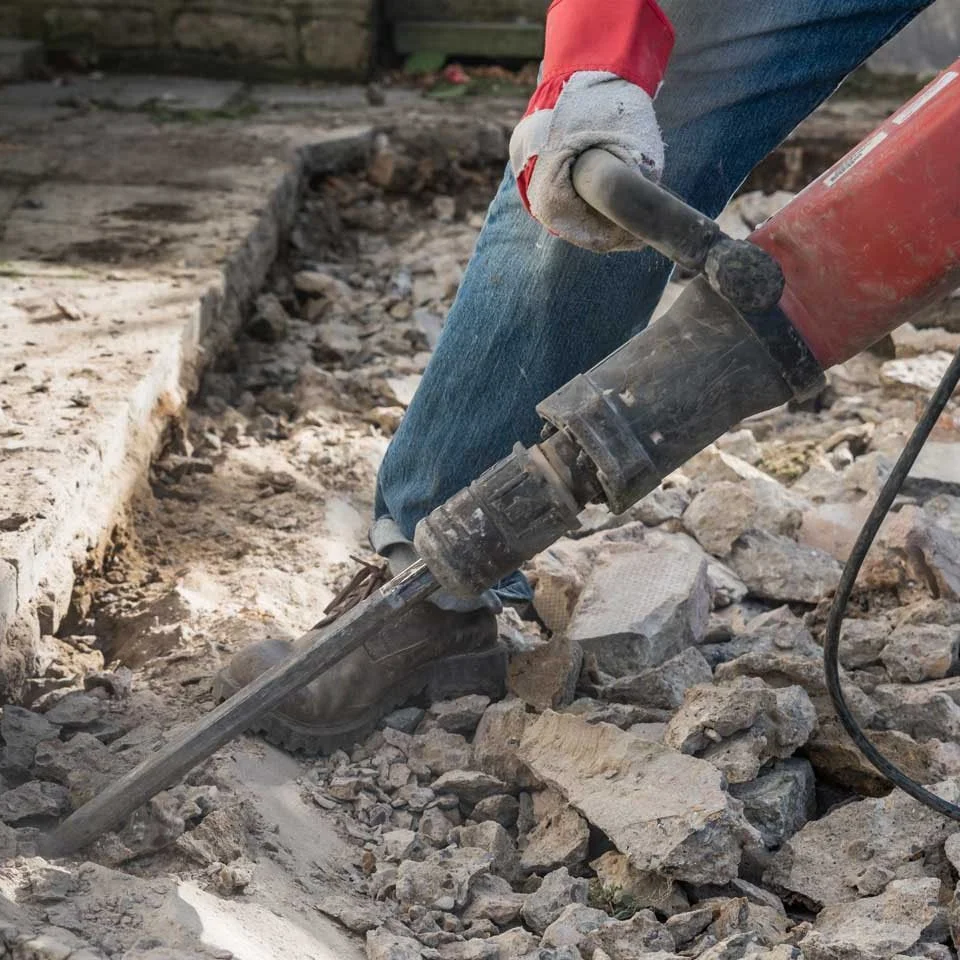
Choosing Tools: For thinner slabs (4 inches or less), a sledgehammer can break up concrete, while thicker pads may require a jackhammer or even a small excavator. Hydraulic splitters or saws might be used for precision removal.
Breaking and Removing: Starting at an edge or weak point, cracks are made, breaking down the pad into smaller chunks. A pry bar may help lift sections for easier removal.
Disposal and Site Cleanup: Debris is typically hauled away to a recycling facility, where concrete is crushed for reuse in new construction projects.
Professional Removal Benefits
Hiring professionals can make the process faster and safer, especially for large or reinforced pads. Professional companies have access to heavy-duty equipment like skid-steers and know how to manage complex removal and disposal efficiently.
Removal of Debris
If needed, we are more than happy to hall off the concrete debris, as well as rebar, that is left behind. This will be included in the quote. In the case of rebar, there will be an added cost. Click here more information on site cleanup and junk removal.
Request a Quote