Wall Demolition
Renew Demolition Co. specializes in selective demolition and in removing all types of walls, regardless material. Drywall, plaster, brick, concrete, you name it.
Before you decide to go ahead and take the wall down yourself (as fun as that may be), it is important to have all walls taken down by professionals who know how identify and remove walls containing electrical wiring, plumbing, or air ducts, as well as load bearing walls. These will need to be removed with care in order to avoid damage to the structure's integrity and minimize the risk of personal injury.
Most walls are composed of brick or drywall, but in some older buildings, walls may be made of plaster. Occasionally, walls may also be decorated with wooden slats or wall panels.
Drywall Demolition
Drywall is commonplace in homes, storefronts, and offices and is a modern replacement to plaster, which is more common in older homes and buildings.
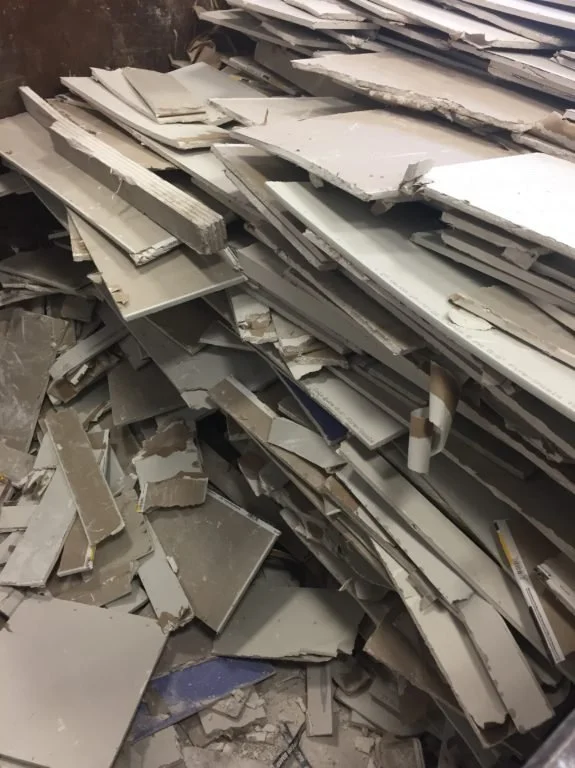
In the case of drywall we can either remove the studs or keep the studs in place so that new drywall can be placed overtop. The drywall will be cut into squares to minimize dust and debris and simplify the process of disposal. We can also remove any insulation behind the drywall.
Masonry Wall Demolition (Brick, Stone & Concrete)
A masonry wall is any wall composed of bricks, stones, concrete blocks, or clay held together by mortar (a mixture of lime, sand, and gypsum). With any masonry walls, we will first have to determine whether or not the wall is integral to the structure of the building before deciding on how to proceed with its demolition.
There are two approaches to taking down a masonry wall: demolishing it or dismantling it. Please see below to determine which solution is best for you.
Dismantling vs Demolition of Masonry Walls
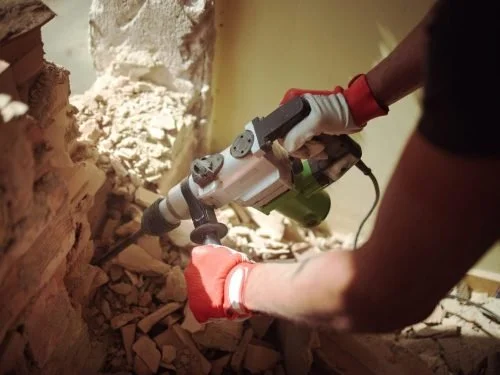
If you want to keep or reuse the stones, blocks or bricks, we can remove the mortar and dismantle the wall piece by piece instead of demolishing it. This method isn’t quite as fun on our end, but we’re happy to do it.
After the wall is dismantled, we recommend cleaning the bricks to completely remove any remaining mortar. Much like with floor adhesives, removing the old mortar will allow new mortar to stick better.
Load Bearing Walls
Load bearing walls provide support to the ceiling of the structure above them. They are often locating where the roof reaches its lowest point. Taking down a load bearing wall by accident is dangerous and could jeopardize the integrity of your property.
Load-bearing walls in residential buildings are often made from concrete, brick, or stone, while commercial spaces might use reinforced concrete or steel to handle greater load demands. The choice of material depends on the load the wall is intended to bear and the building design requirements. Some load-bearing walls also incorporate insulation for thermal efficiency.
Any wall that is not load bearing is referred to as a “partition” or “curtain” wall and can safely be removed without any risk to the surrounding structure. Identifying any load bearing walls is essential before beginning any wall demolition work.
Identifying Load Bearing Walls
If you do not have access to the building’s blueprints, there are several ways to identify load bearing walls:
Exterior walls are usually load bearing.
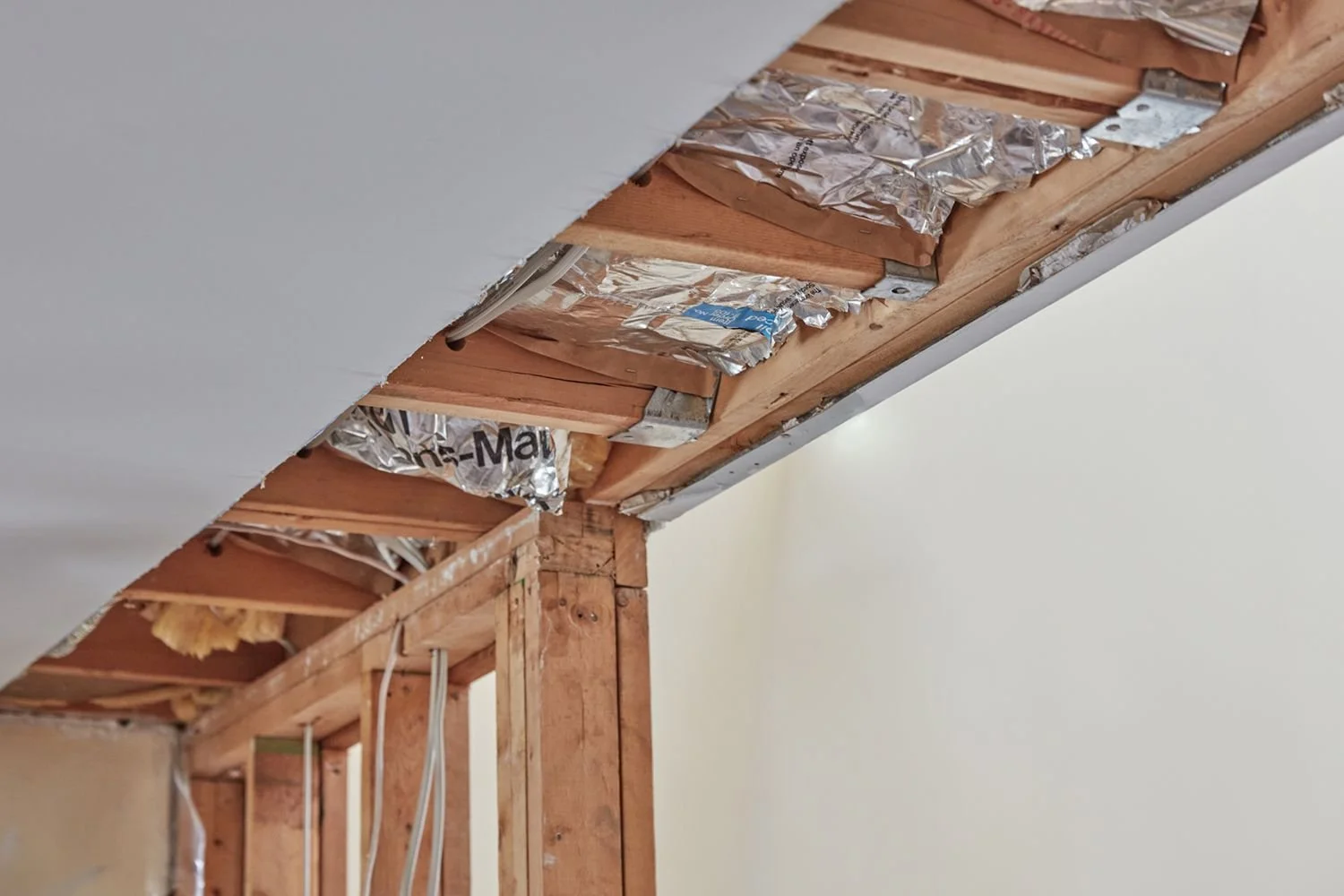
If a wall has a beam connecting two or more floors, it’s a load bearing wall.
Walls that are particularly thick (15cm or more) are likely to be load bearing walls.
If a wall is reinforced with purlin bracing, you can safely assume that it’s a load bearing wall.
Masonry walls (walls made of brick or concrete) are likely to be load bearing, but this is not always the case.
Will I Need a Permit?
Adding or removing walls typically does require a permit. We cannot provide or help to acquire the necessary permits, but if you live in the city of Toronto, you can consult the city’s website for more information on the permits require for making alterations to your property. You do not need a permit to remove or replace your windows.
Special permits are required to remove load bearing walls.
Removing and replacing insulation does not require a permit.
Request a Quote
Other types of walls include…
Cavity Walls
Cavity walls consist of two layers (or “leaves”) with a gap or “cavity” between them. This structure is effective in providing insulation and moisture control, often used for exterior walls in both residential and commercial buildings.
Insulation and Moisture Control: The cavity between the two walls acts as an insulator, reducing heat transfer and preventing moisture from entering the interior. Cavity walls are especially effective in regions with significant temperature variations or high rainfall.
Construction and Design: Cavity walls are usually made from brick or concrete blocks, with insulation material sometimes added between the layers for enhanced thermal efficiency. They’re typically found in newer residential constructions and are increasingly used in commercial buildings as energy efficiency becomes more prioritized.
Shear Walls
Shear walls are essential for resisting lateral forces, like those from wind or earthquakes, and are commonly found in multi-story buildings. These walls enhance the building’s stability and protect it from lateral shifts during seismic events.
Commercial Use: In commercial buildings, especially in earthquake-prone areas, shear walls are often constructed from reinforced concrete or steel to maximize strength. For residential buildings, shear walls are used in specific areas where wind or seismic activity is a concern, providing additional support without compromising space.
Demolition Considerations: Shear walls are critical to a building’s lateral stability, so they require specific techniques for removal, especially in partial demolitions. Removing shear walls often necessitates reinforcing or replacing them with bracing or other support structures to ensure ongoing stability.
Retaining Walls
Retaining walls hold back soil or other materials, primarily in outdoor areas. These are load-bearing structures commonly used in both residential and commercial landscapes, providing support and preventing erosion on sloped terrains.
Types and Materials: Common materials for retaining walls include concrete blocks, stone, and reinforced masonry. The wall’s height, load requirements, and soil conditions dictate its material and design. They are an essential feature in commercial spaces with significant landscaping or in residential yards built on sloped properties.
Demolition Needs: Demolishing a retaining wall requires consideration of the surrounding terrain. In some cases, removing a retaining wall may necessitate additional grading work to prevent soil erosion.
Glass Partition Walls
Glass partition walls are primarily non-load-bearing walls used to enhance space division without obstructing light or visual connectivity. These walls are popular in commercial office buildings, contributing to an open, collaborative environment while still providing some degree of privacy.
Use in Modern Designs: In commercial spaces, glass partitions create open office layouts, where they can be frameless or supported by aluminum frames for added stability. In residential applications, glass walls or sliding glass doors are often used for home offices or as room dividers in compact spaces.
Demolition Aspects: Glass walls can be removed relatively easily without impacting the building structure. Careful handling is necessary to avoid shattering, especially if the glass is tempered or laminated.
Parapet Walls
Parapet walls extend above the roofline, often serving as a guardrail for rooftops or as an architectural element. They are found on both residential and commercial buildings, particularly in urban settings.
Material and Design: Parapet walls are typically made of concrete, brick, or metal, depending on their structural requirements and aesthetic purpose. In commercial buildings, they are often designed to withstand wind pressure and provide an additional safety barrier on rooftops.
Demolition Considerations: Removing or modifying a parapet wall may affect the roof’s drainage or wind resistance, making it important to address these factors in demolition planning.
Fire-Rated Walls
Fire-rated walls, or firewalls, are essential in both residential and commercial spaces for fire containment. These walls are designed to withstand fire for a specified period, helping to prevent the spread of flames and smoke between building sections.
Construction and Materials: Fire-rated walls are built with fire-resistant materials like gypsum, concrete, or specialized fireproof boards. They are essential in high-occupancy commercial buildings where building codes often require them to separate units or sections.
Removal Caution: Demolishing fire-rated walls requires caution to ensure compliance with safety regulations. In some cases, fire-rated barriers may need to be rebuilt or reinforced during renovation or partial demolition.
FAQs
-
No problem! We can remove windows if needed. No additional permits are required for window removal.
-
After all is said and done, a considerable amount of debris will be left behind (at least one wall’s worth).
Any debris that has to be removed will be included in the job estimate.
If you’d prefer that a masonry wall is to be dismantled instead of demolished so that you can keep the material, we will leave the material for you to do with as you please.
-
At the very least, you will require a builder’s permit to have a wall demolished or dismantled. Depending on whether or not the project will require electrical circuits, plumbing or air ducts to be rerouted, you may need to meet additional permits and inspection requirements.
If you live in the city of Toronto, you can consult the city’s website for more information on permit requirements.